Orson
Welles
A restless inventor of forms who remade the theatre, the radio drama and the motion picture before he turned thirty — and never stopped experimenting.

The boy wonder who kept reinventing himself
George Orson Welles was born on May 6, 1915, in Kenosha, Wisconsin. A precocious child steeped in Shakespeare, painting and magic, he talked his way onto the stage of Dublin's Gate Theatre as a teenager and was directing in New York by his early twenties.
With John Houseman he founded the Mercury Theatre in 1937, and the company's radio series made his voice famous across America. Hollywood followed: RKO offered him unprecedented creative control, and in 1941 he released Citizen Kane, his first feature, which he produced, co-wrote, directed and starred in.
The freedom did not last. His second film, The Magnificent Ambersons, was re-edited by the studio in his absence, and for the rest of his career Welles worked increasingly as an independent — financing his films with acting roles, shooting across Europe and North Africa, and finishing work over years rather than months.
That independence produced some of cinema's most personal films, from Othello and Chimes at Midnight to the essay-film F for Fake. Welles died in Los Angeles on October 10, 1985, leaving behind finished masterpieces, unfinished projects and an influence that has only grown.
Selected films
Before the cameras, the voice
Macbeth
Staged in Harlem with an all-Black cast and relocated to a Caribbean court, the production played to packed houses and announced a major new director.
Caesar
A modern-dress Julius Caesar recast as a study of fascism, stripped to a bare stage and sculpted with light — the Mercury's defining opening statement.
The War of the Worlds
The Mercury's Halloween-eve adaptation of H.G. Wells, told as a series of breaking news bulletins, became one of the most talked-about broadcasts in radio history.
Video highlights

Citizen Kane
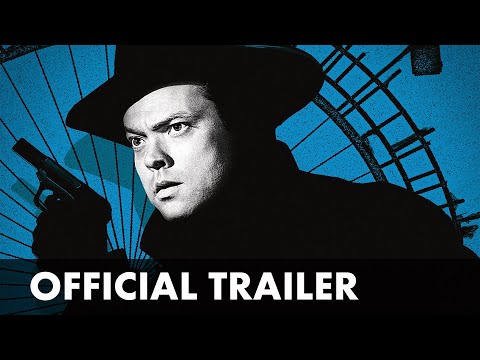
The Third Man

Touch of Evil

The Other Side of the Wind

On His Early Years

Welles Interviews Cavett
Videos are embedded from the official YouTube channels of their rights holders: Warner Bros. / Fathom via Regal, Studiocanal, BFI, Netflix and The Dick Cavett Show.
Honors & recognition
Critics' polls have repeatedly placed Citizen Kane among the greatest films ever made, and generations of filmmakers cite Welles as the reason they picked up a camera.
- 1942Academy Award, Best Original Screenplay, Citizen Kane (shared with Herman J. Mankiewicz)
- 1952Grand Prix, Cannes Film Festival, Othello
- 1971Honorary Academy Award
- 1975AFI Life Achievement Award
- 2018World premiere of The Other Side of the Wind, completed decades after filming began
From the Estate
Rosebud & beyond
Rosebud Supply Co.
Apparel and goods featuring Orson Welles's own watercolor artwork alongside contemporary designs.
Visit the shop →@orsonwellesofficial
Photographs, artwork, anniversaries and news from the world of Orson Welles.
Follow on InstagramLicensing, permissions & inquiries
Commercial use
Requests to use the name, image, voice or signature of Orson Welles in products, advertising or media.
Research & archives
Inquiries from scholars, archivists, curators and documentary producers.
Media & events
Retrospectives, restorations, anniversaries and press requests.
Contact: Reeder Brand Management — david@reederbrandmanagement.com
Note: rights to individual films and recordings may be held by studios or other parties.